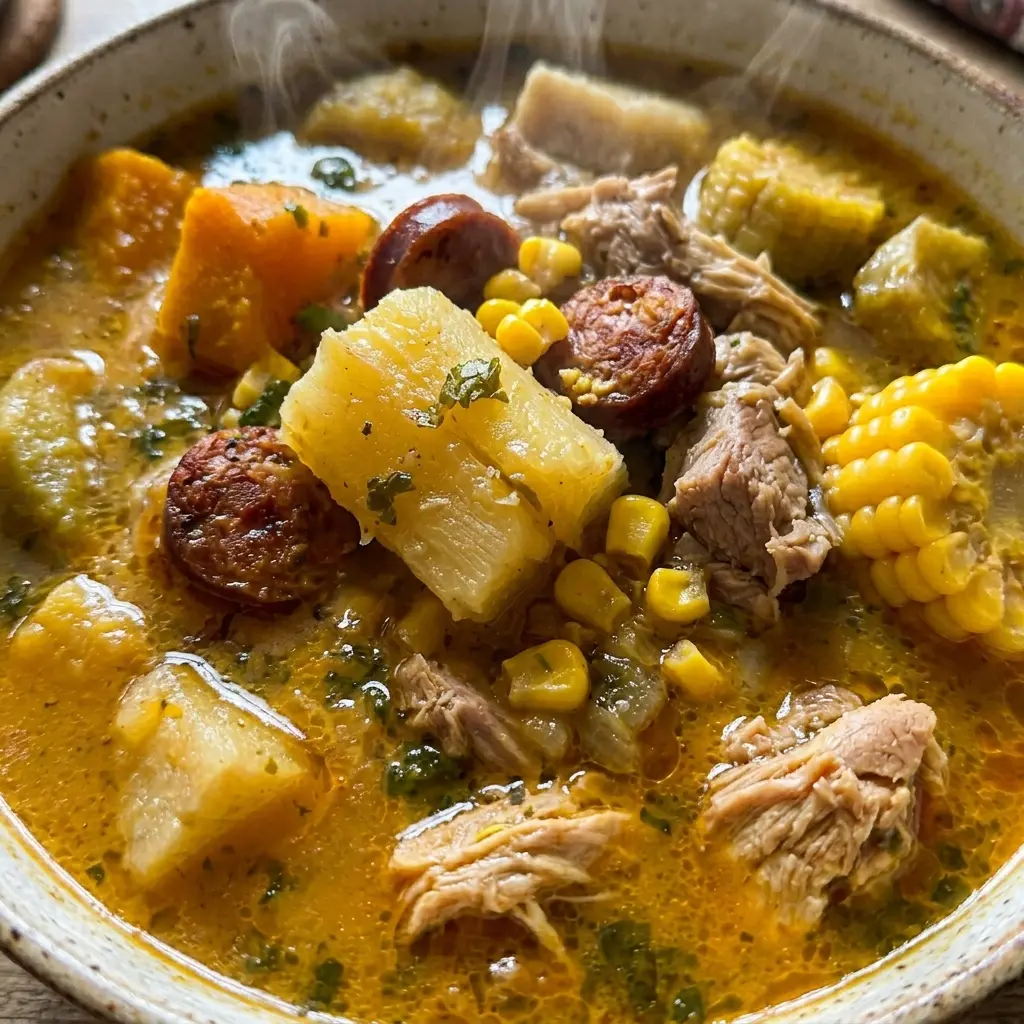
Puerto Rican Sancocho is a beloved traditional stew brimming with flavors and vibrant ingredients, reflecting the island’s rich culinary heritage. This dish is not just food; it’s a cultural experience that ties families together during gatherings. Sancocho is particularly cherished during festive occasions, family celebrations, and holidays, often served as a symbol of unity and comfort. Its hearty nature makes it a quintessential Caribbean comfort food, ideal for warming up cold nights or enjoying on a lazy Sunday afternoon.
The foundation of Puerto Rican Sancocho lies in its diverse ingredients, including meats, assorted root vegetables, and unique spices. Each component plays a significant role in creating the dish’s robust and savory profile. From tender meat to seasonal vegetables, the combination creates a soul-satisfying pot of stew that’s both filling and nourishing.
Table of Contents
Key Ingredients of Puerto Rican Sancocho
When preparing Puerto Rican Sancocho, understanding the key ingredients is essential as they all contribute to the dish’s flavor and texture. Here’s a closer look at these ingredients:
- 1 med yuca
- 1 med white yautia taro root
- 1 green plantain
- 1 yellow sweet plantain
- 10 oz calabaza pumpkin or kabocha squash
- 2 fresh ears sweet corn
- 1 lb pork or beef stew meat, trimmed of excess fat and cut into 2-inch pieces
- 1 lb boneless chicken thighs, trimmed of excess fat and cut into 2-inch pieces
- 1 ½ tbsp salt, plus more to taste
- ¼ tsp black pepper
- 1 tbsp olive oil plus more as needed
- ½ cup sofrito
- 10 cups pork or beef stock
- 3 dried bay leaves
- 1 cup Spanish chorizo, thinly sliced
- White rice for serving
Yuca: A Versatile Root Vegetable
Yuca, also known as cassava, is a staple in Puerto Rican cuisine. Its starchy texture, once cooked, adds a wonderful creaminess that enriches the broth. Being gluten-free, yuca is often favored, especially among those with dietary restrictions.
Yautia: The Taro Root Alternative
Yautia, or white taro, brings a slightly nutty flavor and unique texture to the dish. It complements the other root vegetables beautifully, adding depth to the overall profile of the Puerto Rican Sancocho.
Plantains: Green vs. Yellow
Plantains are a crucial building block of the stew. Green plantains can be sliced and add starch and structure, while yellow sweet plantains provide a touch of sweetness that balances the savory elements of the stew.
Calabaza Pumpkin: Unique Flavor Profile
Calabaza, or Caribbean pumpkin, is sweet and creamy, providing a rich contrast to the savory meats. Its vibrant color also enhances the visual appeal of the dish, making Puerto Rican Sancocho as enjoyable to look at as it is to eat.
Sweet Corn: Freshness in Every Bite
Fresh sweet corn contributes delightful pops of sweetness that elevate the broth’s flavor. It adds freshness and texture, ensuring every spoonful is a burst of flavor.
The Meats: Pork, Chicken, and Chorizo
Pork and chicken are traditional choices for Puerto Rican Sancocho, with their respective flavors melding perfectly to create a heartwarming stew. And let’s not forget the chorizo, which infuses the broth with spicy, smoky flavors that are unmistakable and utterly delicious.
Importance of Sofrito in Flavor Development
Sofrito—a vibrant blend of herbs and vegetables—serves as a flavor base for Puerto Rican Sancocho. It packs a punch with its garlic, peppers, onions, and cilantro, promoting a fragrant and warm aroma that draws everyone to the kitchen.
Role of Stock and Seasoning
The choice of stock, either pork or beef, is decisive when it comes to the stew’s heartiness. Combined with appropriate seasonings and bay leaves, the broth becomes a rich landscape for all the flavors to flourish.
Preparation Steps for Puerto Rican Sancocho
Crafting Puerto Rican Sancocho may seem daunting, but the methods are straightforward. Here’s a detailed guide to ensure your dish tantalizes the taste buds:
Preparation of Vegetables: How to Peel and Cut
Start by peeling the yuca, yautia, green and yellow plantains, calabaza, and corn. Cut them into bite-sized chunks to ensure they cook evenly. The sizes can vary slightly but aim for 1-2 inch pieces, which helps with texture and cooking times.
Seasoning the Meats: Tips for Best Flavor
Season the pork and chicken well with salt and black pepper. This seasoned meat will retain flavor throughout the cooking process and ensure it’s tender and savory by the time the stew is complete.
Browning the Meats: Techniques for Perfect Texture
In a large pot, heat olive oil over medium heat. Brown the pork and chicken in batches. Avoid overcrowding the pan to ensure even cooking. Once browned, remove and set aside; this step enhances the flavor through caramelization.
Cooking the Chorizo: Why This Step Matters
Next, add sliced chorizo to the pot, cooking it until lightly browned. This not only elevates the flavor of the oils but also adds a layer of hearty goodness that infuses into the entire dish.
Incorporating Sofrito: Building Layers of Flavor
Stir in the sofrito and allow it to cook for 2-3 minutes until fragrant. This step melds the flavors together, providing a flavorful backdrop for the meats and vegetables to unite.
Simmering the Broth: Creating a Rich Base
Return the browned meats to the pot. Pour in the stock and toss in the bay leaves, bringing everything to a boil. Reduce the heat, cover, and let it simmer for 45-60 minutes. This slow cooking allows the flavors to intensify and the meats to tenderize beautifully.
Adding Vegetables: Timing for Optimal Tenderness
After the initial simmering period, it’s time to add the yuca, yautia, plantains, calabaza, and corn. Continue to simmer until the vegetables are tender, about 25-30 minutes. This timing ensures all vegetables finish cooking perfectly without becoming mushy.
Final Touches: Adjusting Seasoning and Serving
Before serving, taste the Puerto Rican Sancocho and adjust the seasoning if needed. Serve hot, typically accompanied by fluffy white rice, which perfectly balances the stew’s richness and flavors.
Cooking Techniques and Tips
To elevate your Puerto Rican Sancocho, consider these invaluable cooking techniques and tips:
- Importance of Layering Flavors: Each step builds upon the last. Browning the meat and adding sofrito first sets the stage for a deep, complex flavor.
- Best Cooking Methods for Sancocho: Slow cooking is key. It allows flavors to meld and ingredients to cook evenly, creating a sumptuous stew.
- Tips for Cooking with Fresh Ingredients: Whenever possible, opt for fresh, local ingredients. Their authenticity shines through in the final dish.
- Common Mistakes to Avoid: Don’t rush the simmering process; this vital step builds flavor. Also, avoid overcooking your vegetables, which can lead to a mushy texture.
Serving Suggestions for Puerto Rican Sancocho
When it comes to serving Puerto Rican Sancocho, traditional accompaniments enhance the dish further:
Traditional Accompaniments: White Rice
White rice is typically served alongside Sancocho, soaking up the savory broth and adding heartiness to the meal.
Additional Toppings: Avocado, Lime, and Cilantro
For a refreshing boost, consider adding sliced avocado, a squeeze of lime, or freshly chopped cilantro on top. These toppings add freshness and contrast that brightens the dish.
Presentation Ideas for a Festive Meal
For family gatherings, serve Puerto Rican Sancocho in large bowls, garnished with fresh herbs. Consider pairing it with a colorful salad or tropical fruit platter to create a festive atmosphere that celebrates the rich flavors of Puerto Rican cuisine.
Variations of Puerto Rican Sancocho
Although Puerto Rican Sancocho has a traditional base, there are variations that showcase the dish’s versatility:
Vegetarian and Vegan Alternatives
Those seeking plant-based options can replace the meats with hearty legumes like chickpeas or black beans, enhancing the stew’s protein content while retaining the beloved flavors.
Regional Variations Across the Caribbean
Different islands contribute their unique spin, incorporating local ingredients and spices. Each version reflects the essence of its region, creating diverse and exciting flavor experiences.
Sancocho with Different Proteins: Beef, Lamb, or Seafood
For a twist, feel free to use variations of meats. Beef, lamb, or even seafood can offer distinct flavors, allowing you to tailor Puerto Rican Sancocho to your preference.
Creative Additions: Beans and Other Vegetables
Experimenting with additional ingredients like beans or more seasonal vegetables can create a custom Sancocho that fits personal taste, showcasing your culinary creativity.
Frequently Asked Questions
- What ingredients are traditionally used in Puerto Rican Sancocho?
- How long does it take to cook Puerto Rican Sancocho until the meats and vegetables are tender?
- What types of meat are commonly added to Puerto Rican Sancocho?
- What is typically served with Puerto Rican Sancocho?
Conclusion
Puerto Rican Sancocho is more than just a meal; it’s a culinary journey that connects families and encapsulates the essence of Caribbean comfort food. With its hearty blend of ingredients, it truly embodies the warmth and hospitality of Puerto Rican culture. We encourage you to try this traditional recipe and explore the delightful flavors for yourself. Create your version of Puerto Rican Sancocho, share experiences, and don’t hesitate to experiment with variation!
More Related Recipes You Might Enjoy
- Homemade Vanilla Cinnamon Milk Tea
- Blueberry and Lemon Zest Cottage Cheese Bites
- Vegetarian Sweet Potato Casserole
- Mexican Chicken and Rice with Queso
Looking for more tasty ideas? Visit Savory Nest Kitchen on Pinterest for a treasure trove of easy meals, comforting bakes, and fun kitchen inspiration!